
Weighing solution
Electronic load cell systems
Most of the world’s scales are electronic — and in the right environment they are accurate, fast and economical. This page explains how a strain-gauge system is actually built: sensor, junction box, cabling and indicator, and what each part needs to stay accurate.
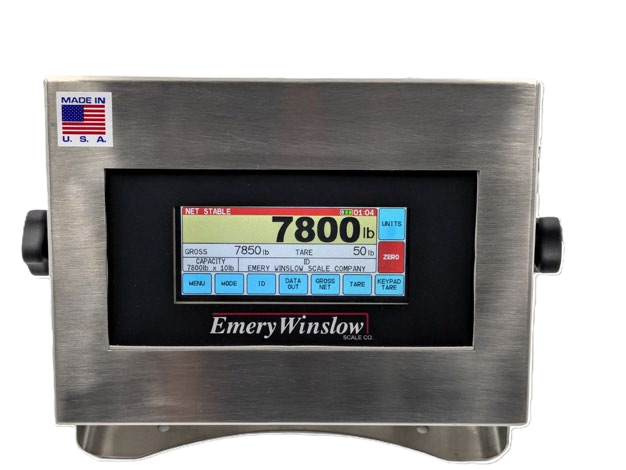
The world’s default weighing technology
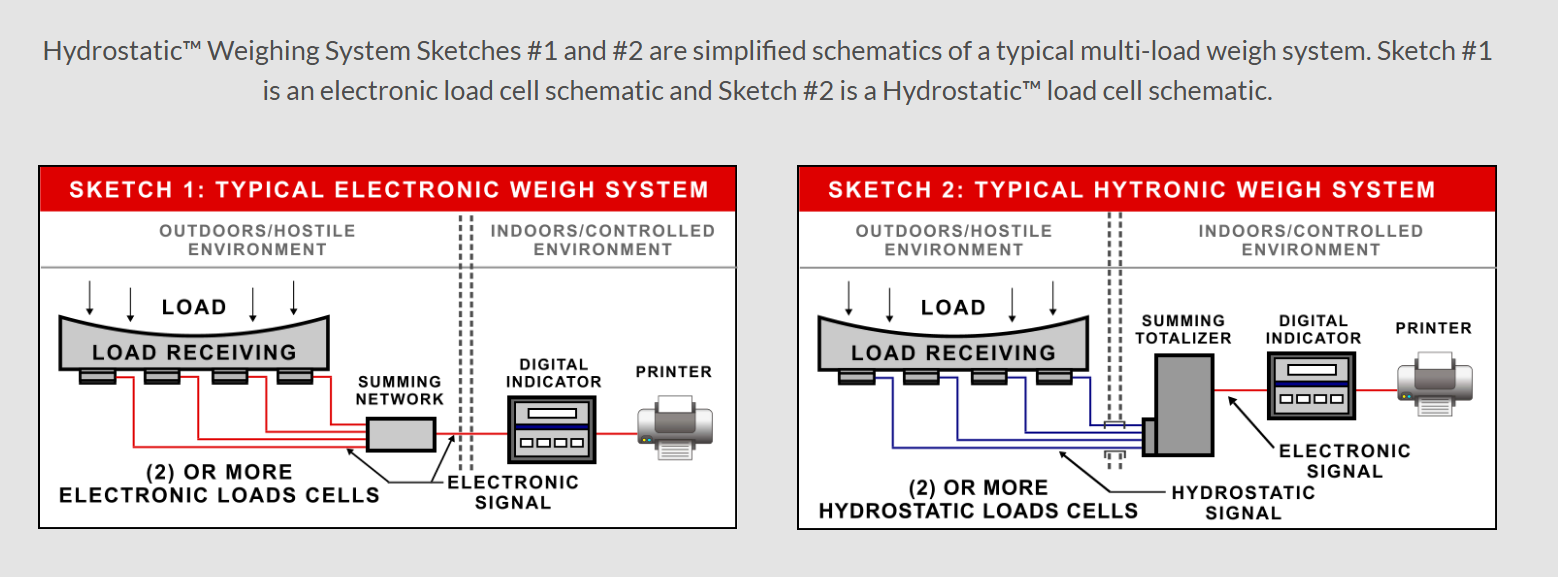
An electronic load cell system is a chain of electrical parts, and every link matters: the strain-gauge sensors under the load, the junction box that sums them, the cables that carry millivolt signals, and the indicator that excites, converts and displays. Understanding the chain explains both the technology’s strengths — speed, resolution, component choice — and its maintenance needs.
How a strain-gauge load cell works
Inside each cell, a precision metal element is machined to flex by a minute, repeatable amount under load. Foil strain gauges bonded to that element stretch and compress with it, changing their electrical resistance. Wired as a Wheatstone bridge and fed with an excitation voltage from the indicator, the cell returns a signal in millivolts per volt that is proportional to the load. It is an elegant, proven principle — and it means the sensing point is, by design, an electrical device with electrical connections.
The summing network: junction boxes and cabling
Junction (summing) boxes
On a multi-cell scale, each cell’s signal runs to a junction box, where the signals are trimmed — corner-adjusted so every corner reads alike — and summed. The box lives at the scale, so its sealing decides how long the system stays accurate outdoors.
Cabling
Home-run cables carry millivolt signals; six-wire cables add sense lines that compensate for cable resistance. Shielding, intact insulation and surge protection are not accessories — a damaged or wet cable shows up directly as drift.
The indicator
The indicator supplies excitation, digitises the summed signal and holds the calibration. It is the one part that can always live indoors — the cells and their box cannot.
Keeping an electronic system accurate
- Hermetically sealed stainless cells (IP68/IP69K classes) for wet areas
- Surge protection on long outdoor cable runs
- Scheduled calibration and corner checks
- Dry pits, sealed boxes, intact cable insulation
- Planned cell replacement — in harsh duty, cells are consumables
- Spare cells matched to the installed type and capacity
Where electronic systems fit best
Dry, controlled indoor weighing
Bench, floor and packing scales in clean, dry halls — the environment the technology was designed for, where it runs for years with basic care.
High-speed and dynamic weighing
Checkweighers, in-motion and process weighing that needs a fast electrical response — an area where electronic systems are the natural choice.
Standard ranges and trade approvals
The widest component ecosystem in weighing: capacities from grams to hundreds of tonnes, and established legal-for-trade approvals — usually at the lowest first cost.
When the environment wins
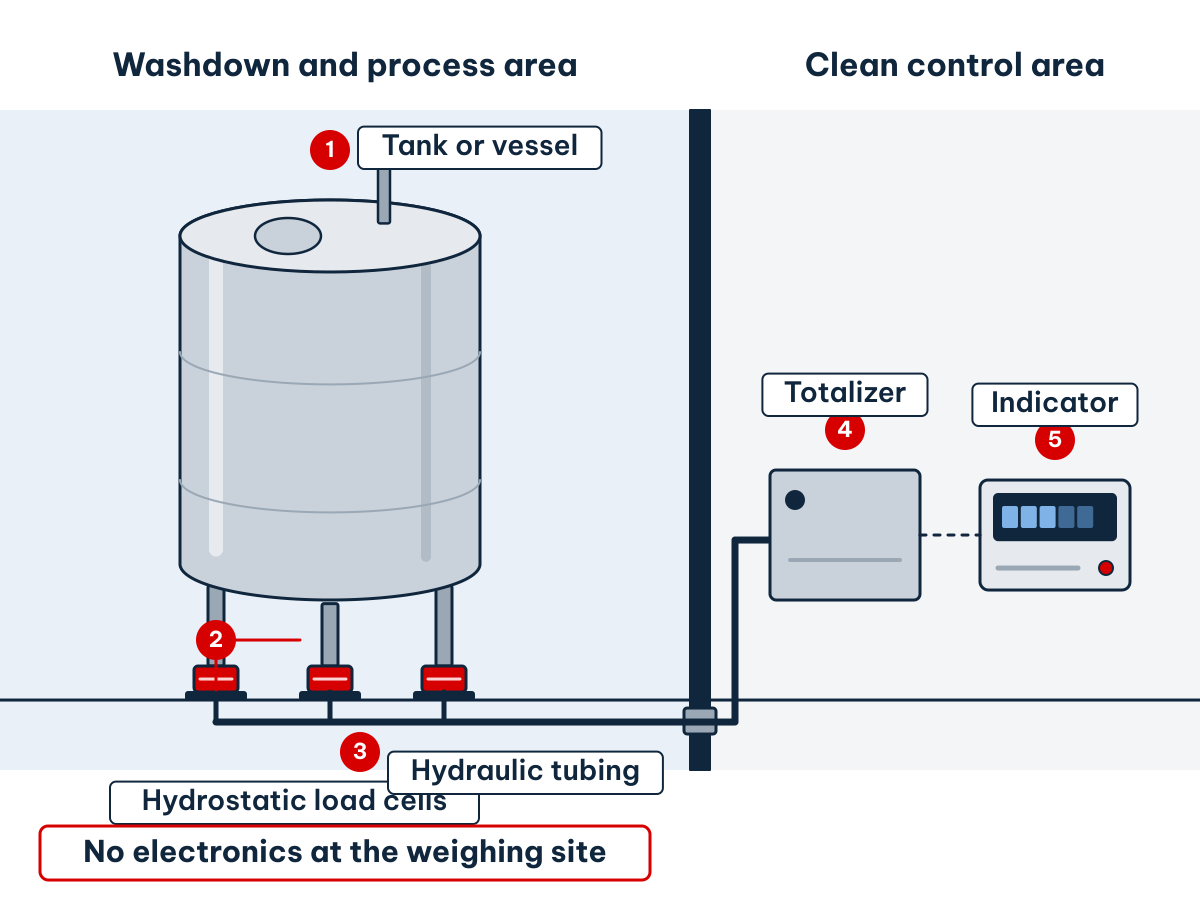
None of the above changes what water, lightning and corrosion do to electrical parts at a sensing point. Where a scale is washed down, flooded, struck by lightning or eaten by chemicals, the sound specification is the one with no electronics at the scale at all: a hydrostatic system. HearS specifies both technologies — the site decides which one fits. The full comparison sets out the advantages and limitations of each, side by side.
Choosing between electronic and hydrostatic?
Tell us the application and the environment. HearS will specify the system that fits — and say why.