
HearS Solutions
Food processing weighing
Mixers, blending tanks and storage vessels in a food plant are washed down constantly — so the weighing underneath them lives in water, steam and detergent. Food processing is one of Vietnam’s largest industries, and its weighing points are among the wettest anywhere.
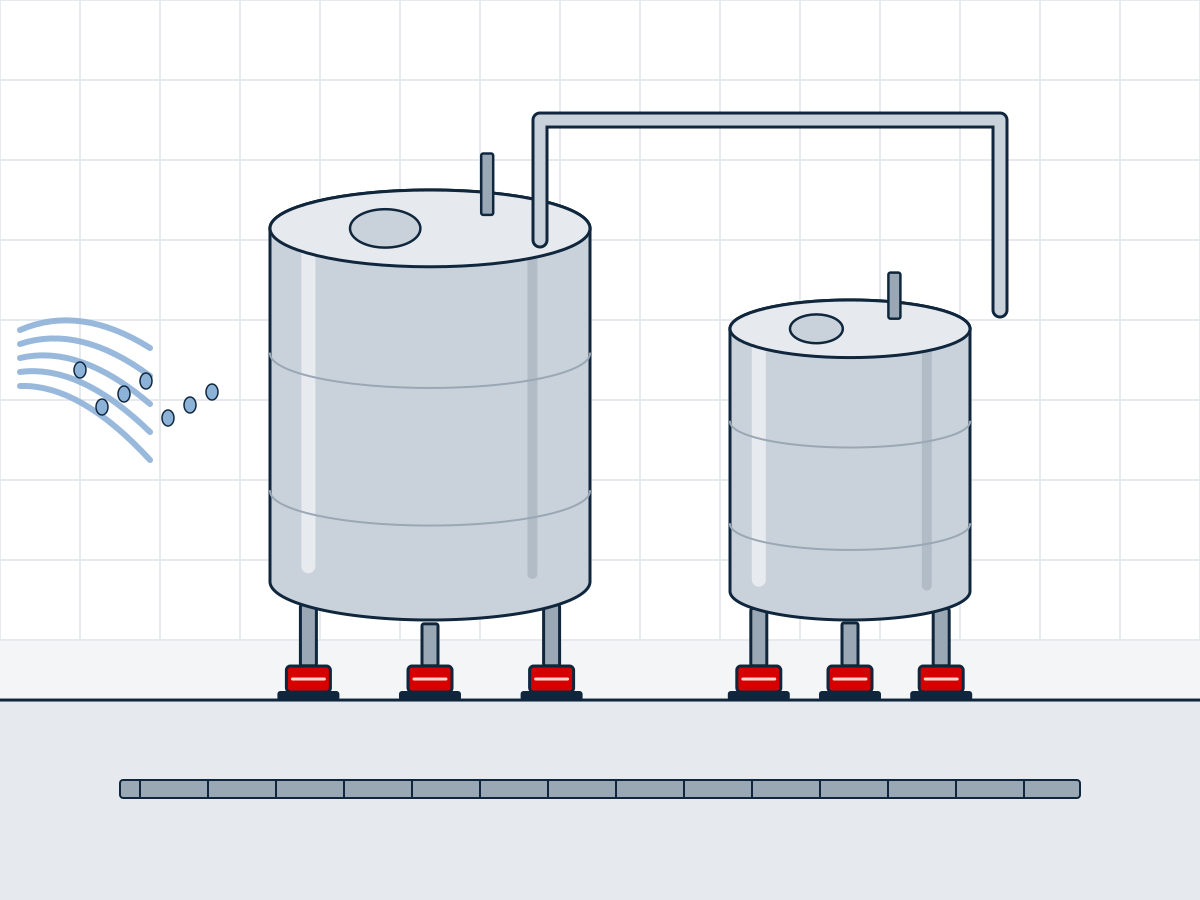
The weighing challenges in food plants
Hygiene rules set the environment; the weighing has to survive the same regime as the vessels it carries.
Washdown, every shift
Water, steam and cleaning chemicals reach everything near a vessel — load cells, junction boxes and cables included.
Hygiene and cleanability
Smooth surfaces and few dirt traps make cleaning faster and audits easier; crevices and cable entries around sensors work against both.
Hard-to-reach vessels
Tanks in tight halls are difficult and disruptive to service — the less equipment there is at the vessel, the better.
Condensation and cold rooms
Temperature swings condense moisture inside enclosures and junction boxes — the slow failure nobody sees until the reading drifts.
The hydrostatic answer
A hydrostatic load cell is a sealed stainless pressure capsule: no strain gauges, no cables, no junction box at the vessel. The signal travels as fluid pressure through tubing to a totalizer in a dry area. Emery Winslow’s food-plant record is published — mixers, hoppers and massagers at Plumrose, Morgan Foods and Boar’s Head run on hydrostatic cells precisely because of nightly high-pressure washdown. Those cells carry Emery Winslow's lifetime guarantee against water, flooding, humidity, washdown and lightning damage.
- No electronics at the vessel to wash, condense on or corrode
- Stainless cells that tolerate detergents and steam
- All electronics in a clean, dry room
- HearS design, installation and calibration support in Vietnam
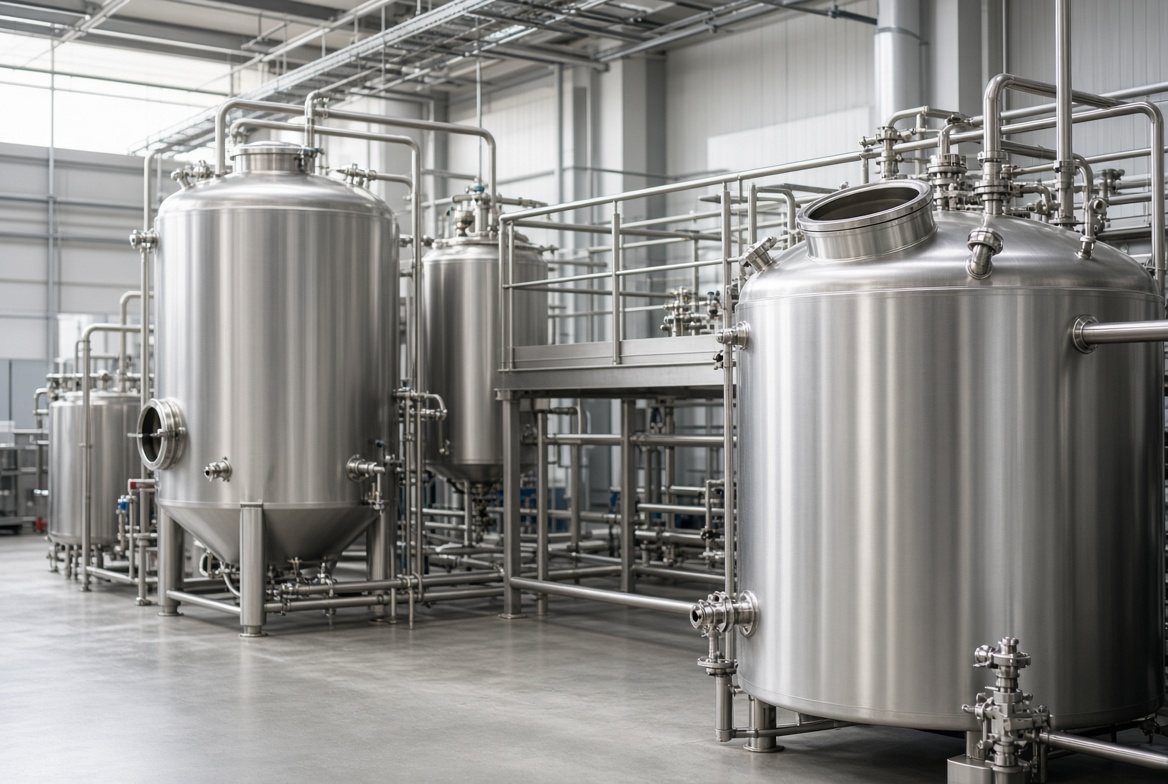
Where it fits
Mixing and blending vessels
Recipe batching by weight instead of level estimates — the vessel itself becomes the scale.
Storage and buffer tanks
Ingredient and product inventory by weight, without manual dipping, sight glasses or guesswork.
Sugar, brewing and silos
Raw sugar and grain silos, malt and adjunct tanks, fermenters and bright tanks weighed through the process.
The digital layer: every weighing becomes a record
Batch weighing becomes batch records: each ingredient addition logged against its recipe and lot. That gives production its traceability file — and gives quality control the numbers to release or hold a batch — without a second, manual record kept beside the scale.
Weighing vessels in a food plant?
Tell us the vessels and how you wash down. HearS will propose the design and scope.
Prefer to talk it through? Send us a photo of your current scale by email — and HearS will advise before any quotation.