
HearS Solutions
Cement & aggregates weighing
Cement is Vietnam’s largest heavy-weighing installed base: 61 clinker plants, about 121.6 million tonnes of cement capacity a year, and a record 112 million tonnes sold in 2025. Every tonne of limestone, coal, gypsum and clinker crosses a scale — and that scale lives in the dustiest environment in industry.

Why scales wear out fast at cement plants
A cement plant or quarry attacks a weighbridge from every side at once. These are the four failure drivers HearS designs against.
Abrasive dust everywhere
Cement and raw-meal dust works into junction boxes, connectors and cable entries. Electronic load cells drift, then fail — usually mid-season, with trucks queuing at the gate.
Vibration and shock loads
Crushers, mills and a continuous stream of heavy trucks shake pit and deck alike. Strain-gauge cells and their cabling take the punishment every shift.
Mud, water and washdown
Quarry mud is hosed off decks and out of pits; monsoon rain fills what the hose misses. Water in the pit is the classic cause of weighbridge failure.
Lightning and surges
Open quarry ground and long cable runs to the control room make outdoor scales a lightning target — Vietnam records around two million lightning strikes a year.
The hydrostatic answer
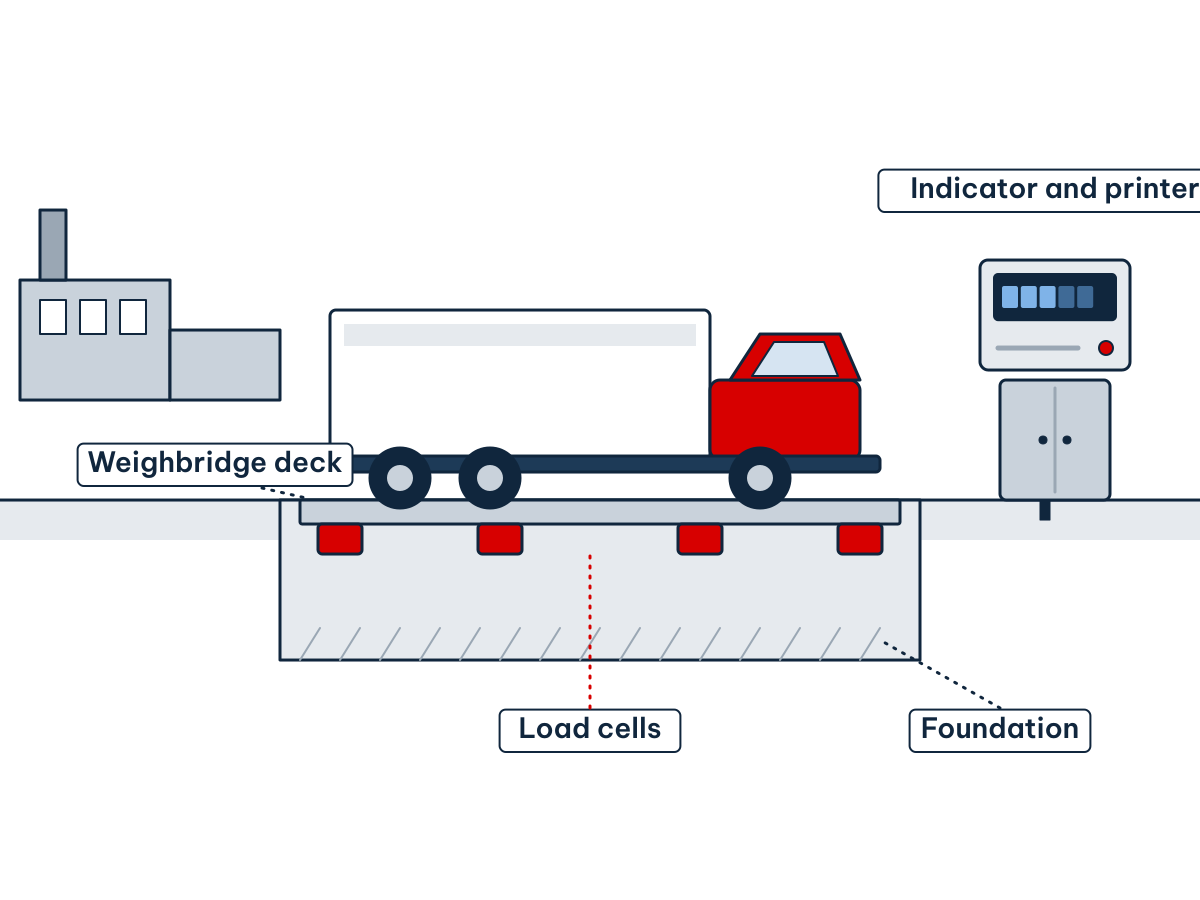
An Emery Winslow hydrostatic load cell has no electronics at the scale: a stainless piston and diaphragm turn the load into fluid pressure, and tubing carries that pressure to a totalizer in a clean, dry room. Dust, mud, water and lightning at the weighing point reach no electronic part — and Emery Winslow guarantees its hydrostatic cells for life against water, flooding, humidity, washdown, lightning and power-surge damage.
- Sealed stainless cells — nothing for dust or water to enter
- No junction boxes or signal cables in the pit
- One electronic signal, created in the control room, not at the scale
- HearS survey, mechanical design, installation and calibration support in Vietnam
Where it fits
Gate weighbridges
Roadweigh II steel- or concrete-deck scales for limestone, coal and gypsum in, cement and clinker out — the plant’s revenue meter.
Silo and hopper weighing
136 and 120 Series cells under raw-meal, kiln-feed and cement silos, and load-out hoppers, for inventory and batching control.
Quarries and aggregates
Standalone quarries feeding Vietnam’s key projects — some 306 million cubic metres of construction stone allocated for 2026–2030 — need scales that survive the same dust and mud.
The digital layer: every weighing becomes a record
Accurate weighing is only the starting point. Every truck pass over the weighbridge can be recorded automatically — plate, time, net weight, delivery contract. By shift end, dispatch has the output report per customer without manual tallying, and any gap between scale figures and paperwork shows up the same day.
Running a cement plant or quarry?
Tell us the site, the trucks and what keeps failing. HearS will propose the design and scope.
Prefer to talk it through? Send us a photo of your current scale by email — and HearS will advise before any quotation.