
HearS Solutions
Weighing for animal feed mills
A feed mill is a silo-and-hopper factory. Around 265 feed mills operate in Vietnam, with roughly 44 million tonnes of design capacity a year and 26.9 million tonnes produced in 2024. The industry includes large international groups — CP, Cargill, De Heus and Japfa among them — and every mill repeats the same weighing points: inbound grain, silo stock, batching, bagging and outbound trucks.
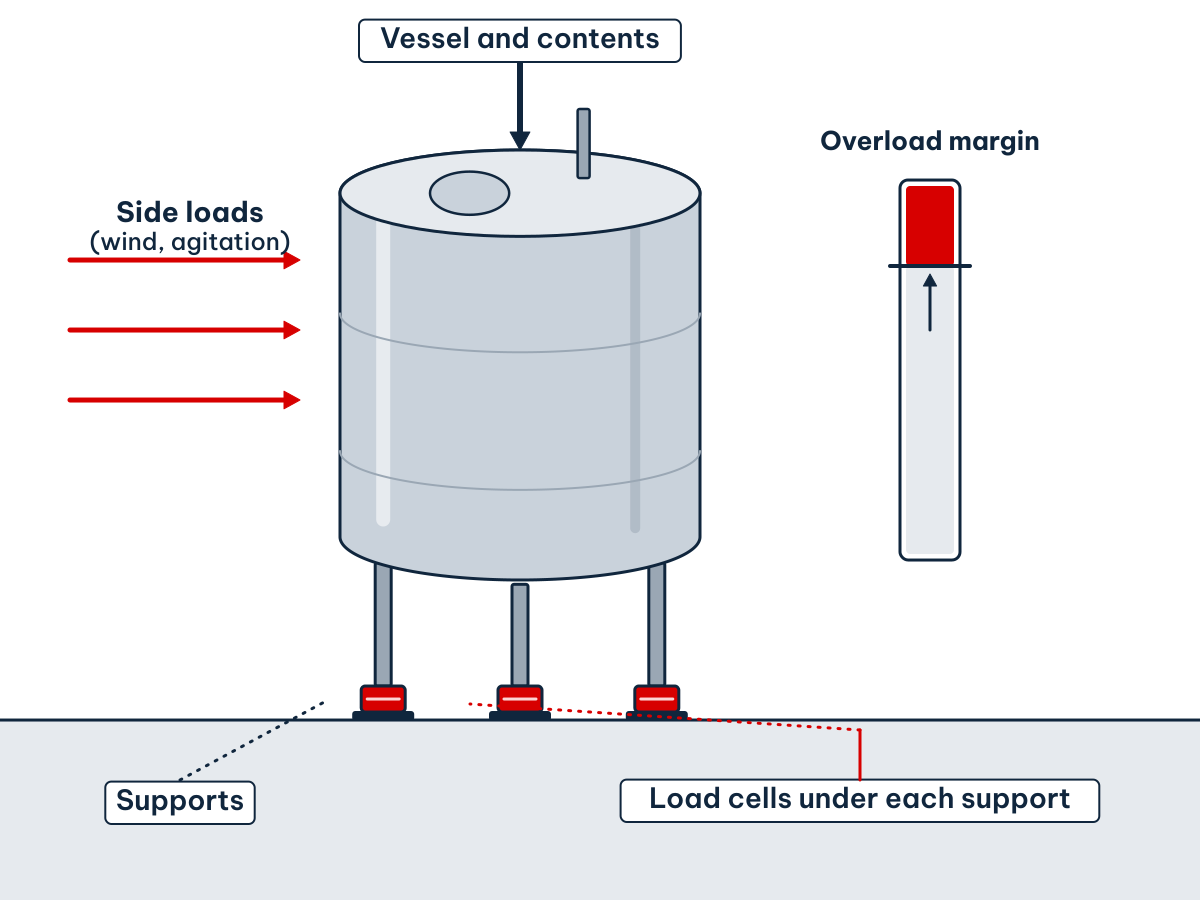
Where feed mills lose money at the scale
The same four points decide the margin of almost every mill.
Batching drift is formulation drift
Hopper scales that drift change the recipe in every batch — a small error, multiplied by thousands of tonnes, is a real cost and a quality risk.
Explosive grain dust
Grain and feed dust can explode. Every electrical device at a weighing point is an ignition source to engineer around; a hydrostatic cell carries no electrical energy at the sensing point at all.
Silo stock you cannot trust
Level readings in dusty, condensing silos are guesses. Weighing the silo itself turns inventory into a number production and purchasing can plan on.
Every truck, weighed twice
Grain and raw materials in, finished feed out — the weighbridge is the mill’s commercial gate, and a bridge out of service stops both directions.
Accuracy without a spark
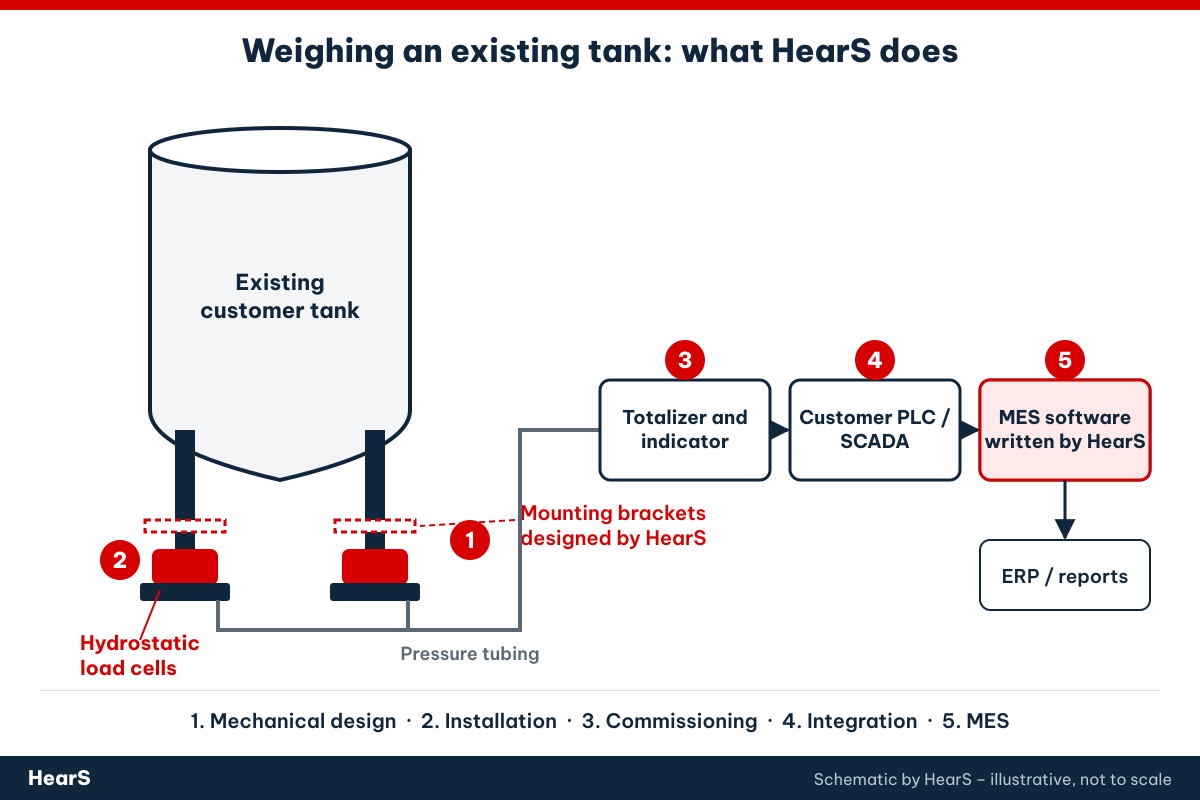
Hydrostatic cells weigh silos and hoppers with no electronics — and no electrical energy — at the vessel. The signal is fluid pressure until it reaches the totalizer in a clean room, so batching accuracy does not depend on devices living in dust, condensation and washdown.
- No electrical energy at the sensing point — one ignition source removed
- Stable silo inventory by weight, not by level guesses
- Cells unaffected by dust, condensation and washdown
- HearS integrates weight data with your PLC, SCADA or ERP
Where it fits
Inbound and outbound weighbridges
Grain and raw-material receiving, and finished-feed dispatch — the mill’s commercial gate.
Silo inventory weighing
Raw-material and finished-feed silos on 136 and 120 Series cells, read continuously.
Batching hoppers and bagging
Batching hoppers and bagging lines fed by weight, with every batch recorded.
The digital layer: every weighing becomes a record
Every ingredient batch that crosses a scale can be recorded against its formula and its lot. Batch records support traceability, and silo in-and-out reconciliation shows shrinkage while it is still small enough to act on.
Running a feed mill?
Tell us the mill, the silos and the batching system you use today. HearS will propose the design and scope.
Prefer to talk it through? Send us a photo of your current scale by email — and HearS will advise before any quotation.