
HearS Solutions
Railway weighing
Static and in-motion track weighing, axle and wheel load monitoring for freight terminals, depots and industrial railways — on outdoor track where the scale lives in ballast, mud and standing water, and where lightning finds every long cable run.
Why trackside is hard on electronic scales
A rail scale cannot be moved indoors. Whatever senses the load sits outside, under the track, in the weather — permanently.
Water and mud in the pit
Track panels sit in ballast that floods in the monsoon and is dug out by hand. Electronic cells and junction boxes live exactly where the water collects.
Lightning on open ground
Rail yards are open, elevated and wired over long distances — a classic lightning path straight into summing boxes and indicators.
Shock and dynamic loads
Coupling impacts and heavy axle loads punish sensors and cabling every day — loaded and empty, in both directions.
Remote, unmanned sites
Many sidings have no resident technician. One failed cell stops wagon billing until a crew can travel to site.
The hydrostatic answer
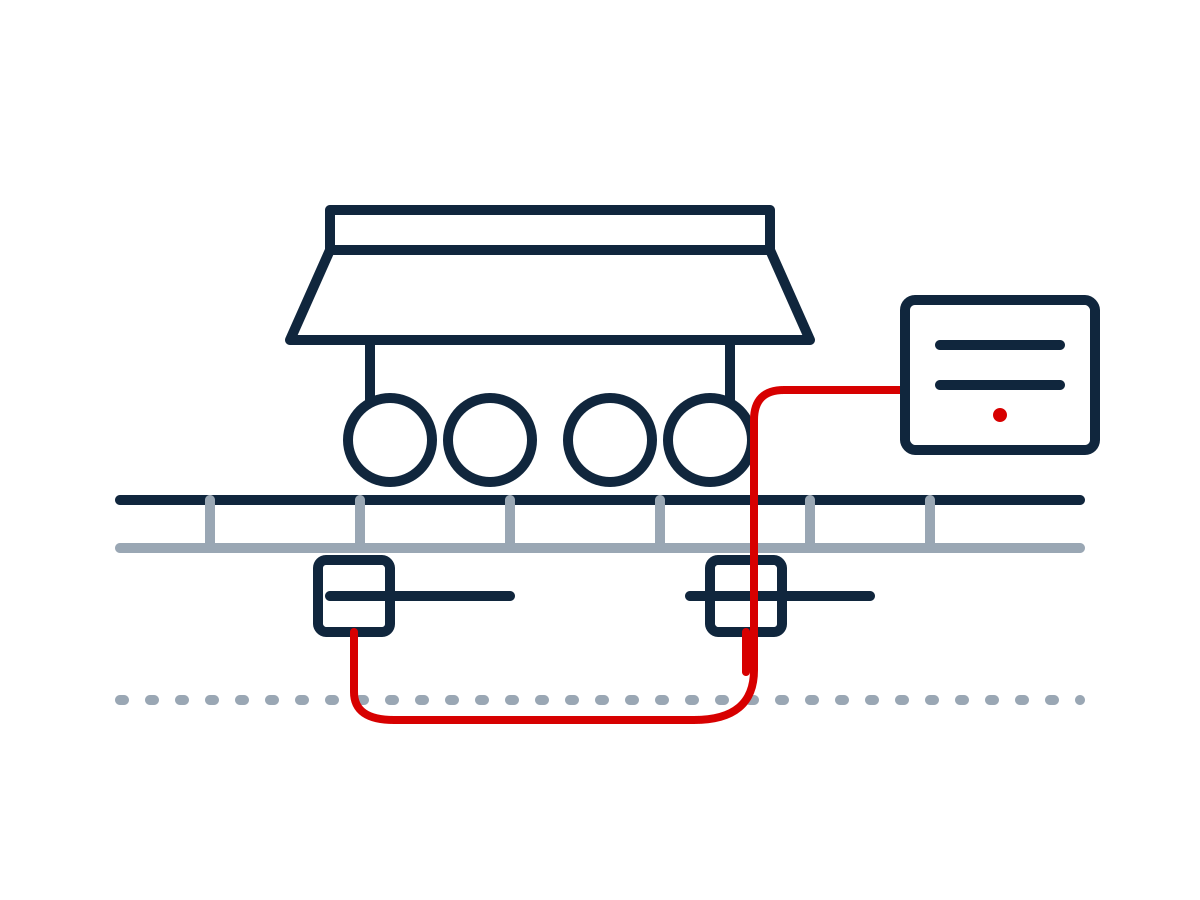
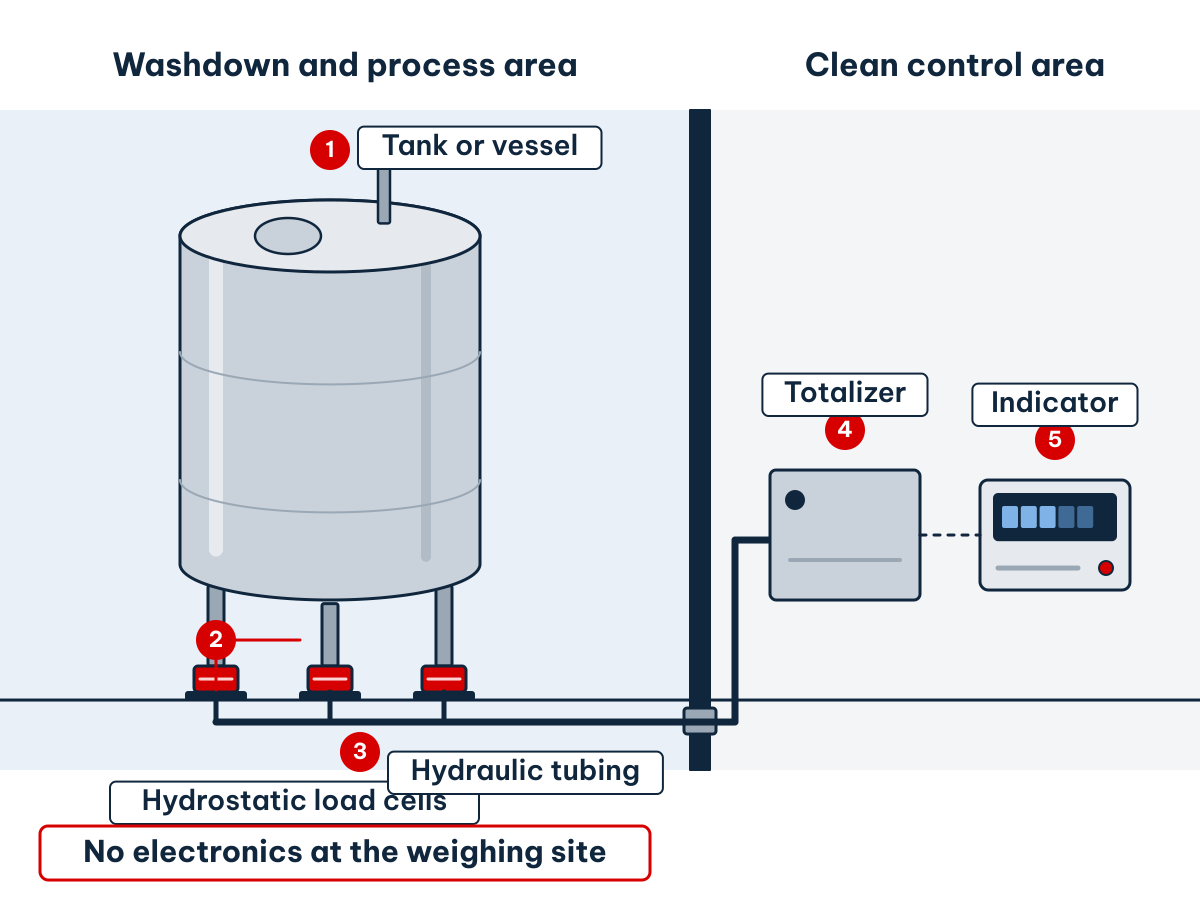
An Emery Winslow hydrostatic track scale puts no electronics at the trackside: sealed stainless cells under the rail panel turn each axle load into fluid pressure, and tubing carries that pressure to a totalizer in the equipment room. Emery Winslow builds railroad track scales on the same Hydrostatic™ technology as its tank and truck scales — and its hydrostatic cells are guaranteed for life against damage from water, flooding, humidity, washdown, lightning and power surges.
- No junction boxes or signal cables in the ballast
- Static and in-motion configurations, specified per site
- Axle and wheel load data for load-distribution checks
- HearS survey, civil-work coordination, installation and calibration support in Vietnam
Where it fits
The Vietnam picture today: rail freight is just over five million tonnes a year, the north–south high-speed line is passenger-first with five freight stations, and construction runs 2027–2035. Rail weighing in Vietnam is therefore a specification capability — for terminals, depots and industrial spurs, and for the cement, steel and quarry suppliers the build will depend on — not a volume market. HearS presents it on those terms.
Freight terminals and intermodal stations
Static track scales for custody weighing of wagons — coal, ore, fertiliser and containers weighed in and out.
In-motion weighing
Trains weighed passing at low speed, axle by axle, for load distribution and overload detection without uncoupling.
Depots and industrial railways
Axle and wheel load checks at depots, and scales on plant and mine spurs — the apatite, coal and cement flows that already move by rail in Vietnam.
The digital layer: every weighing becomes a record
A wagon’s weight only earns its keep as a record. Weighing data — wagon identity, axle loads, gross and net per movement — can be captured against each movement and reconciled between mine, terminal and plant, so the tonne that left is the tonne that was billed.
Specifying rail weighing for a project?
Tell us the site, the traffic and the weighing duty — static, in-motion or axle checks. HearS will propose the design and scope.
Prefer to talk it through? Send us a photo of your current scale by email — and HearS will advise before any quotation.