
HearS Solutions
Weighing scan & scrap
This is the page where the HearS weighing story comes together. Underneath, the hardware layer: scales that keep weighing accurately in harsh environments. On top of the same scale, the digital layer: every weighing scanned, recorded and reported by MES software — E-Tools by CCSS, used in cooperation with CCSS — so the numbers from the yard reach the office with no paper tickets and no re-typing.
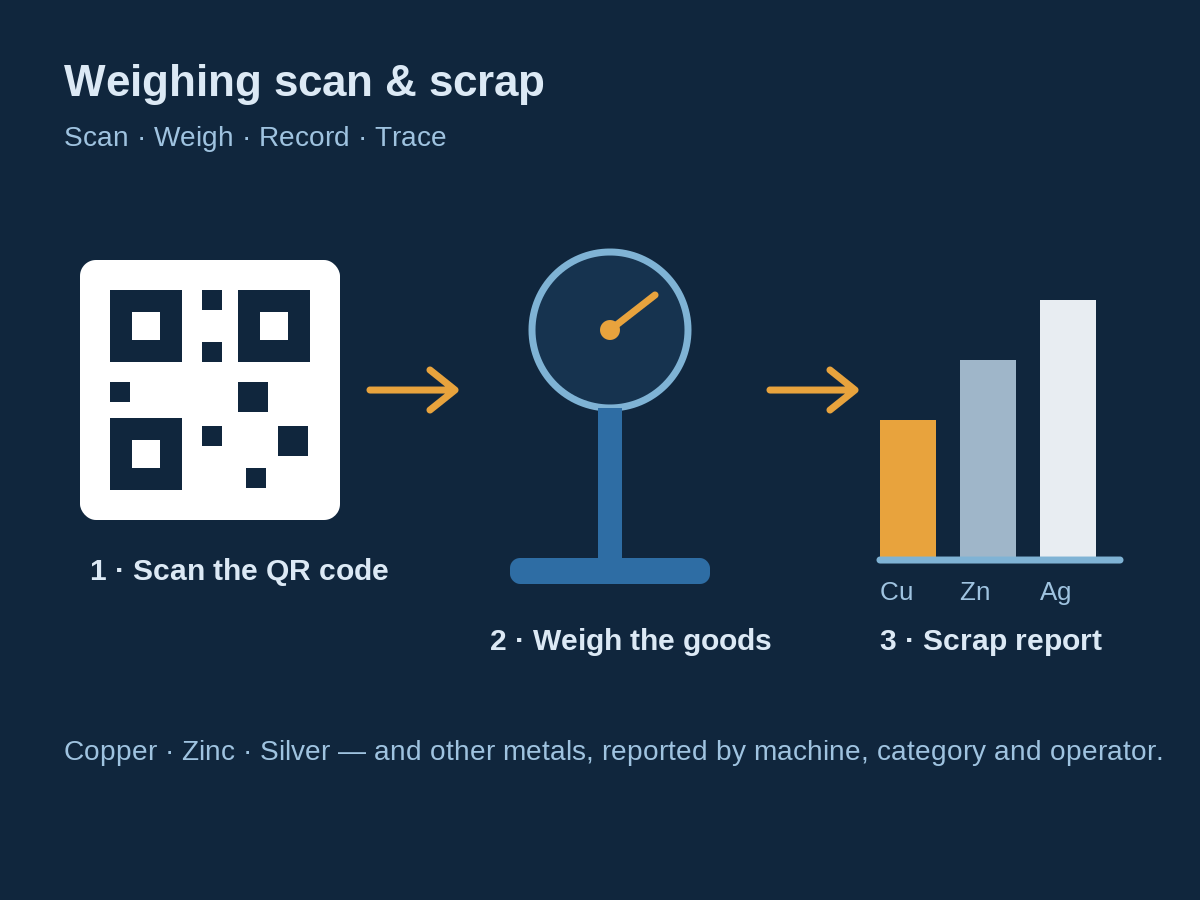
What the solution does
Weighing
Weight acquisition at the line: every weighing is recorded against the job, the lot and the operator — no paper tickets, no re-typing.
QR Code for the goods
Each lot of goods carries a QR code linked to its weighing record. Scan it to see the weight, the origin and the QC status.
Scrap
Scrap recorded by machine, by category and by operator, with calculated scrap per category, machine and operator — so the cause can be traced and reduced, not just recorded.
Quality control module
Input control data (IQC), quarantine inventory and control-data charts: the QC record follows the goods from receiving to finished stock.
One scale, three layers
Scrap is where the three layers meet first — weighing fraud and untracked metal are cash losses. The same structure serves every industry below.
Hardware that survives
Hydrostatic load cells with no electronics at the sensing point keep weighing through washdown, flooding, dust and lightning. Hydrostatic™ Technology
The digital layer — MES
Scan the QR code, weigh, check, report: weight acquisition at the line, the QC module, scrap reports and metal consumption — recorded against the job, the lot and the operator.
Data you can manage by
Reports by shift, day and plant; weigh-in against weigh-out reconciliation; every weighing traceable to its lot and its operator.
Cement & aggregatesMiningAnimal feed millsOil, gas & LPGChemical & fertiliserSeafood processing
Scrap, in HearS colours
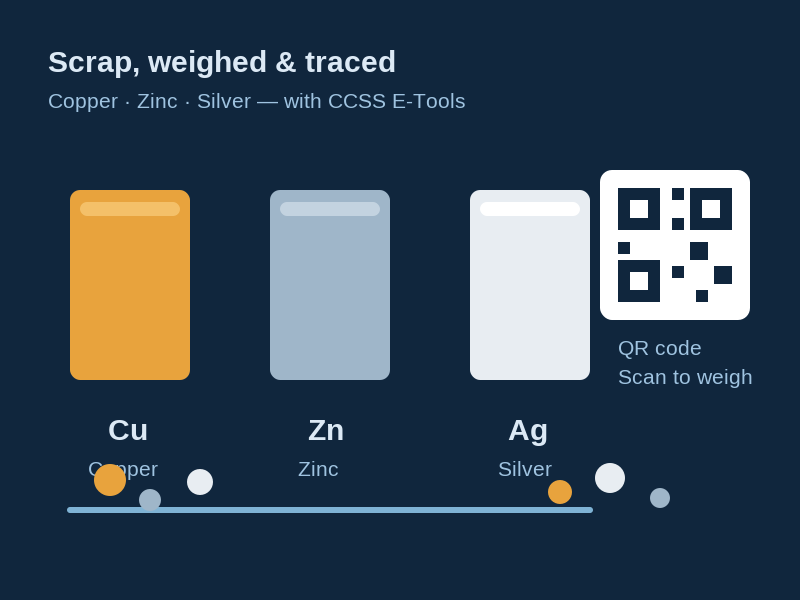
Metal scrap is part of the job: copper, zinc, silver, aluminium, brass and other metals from production. HearS presents scrap in its own brand colours — navy, red and gold — and handles it in cooperation with CCSS E-Tools.
- Scrap by machine — which machines create the most waste
- Scrap by category — which defect types are most critical
- Scrap by operator — trace accountability and root causes
How it works
Receiving
Goods arrive and the job is opened: supplier, vehicle and delivery note recorded against the lot.
Identification
The lot is identified and its QR code issued — the identity every later record will hang on.
Classification
Material is classified by category — for scrap: by metal and grade — before it is weighed.
Weighing
The lot is weighed at the line; the weight is acquired directly into the system, against the job, the lot and the operator.
Quality control
QC data is recorded in the QC module — input control (IQC), quarantine for lots on hold, and control-data charts.
QR code labelling
The lot’s QR label is printed and applied, linking the physical goods to their weighing and QC record.
Data recording
Every record is stored as it happens — no paper tickets, no re-typing, no end-of-shift reconstruction.
Reporting
Scrap and stock reports by machine, category and operator — including metal consumption — ready for management.
Software by CCSS E-Tools, weighing by HearS
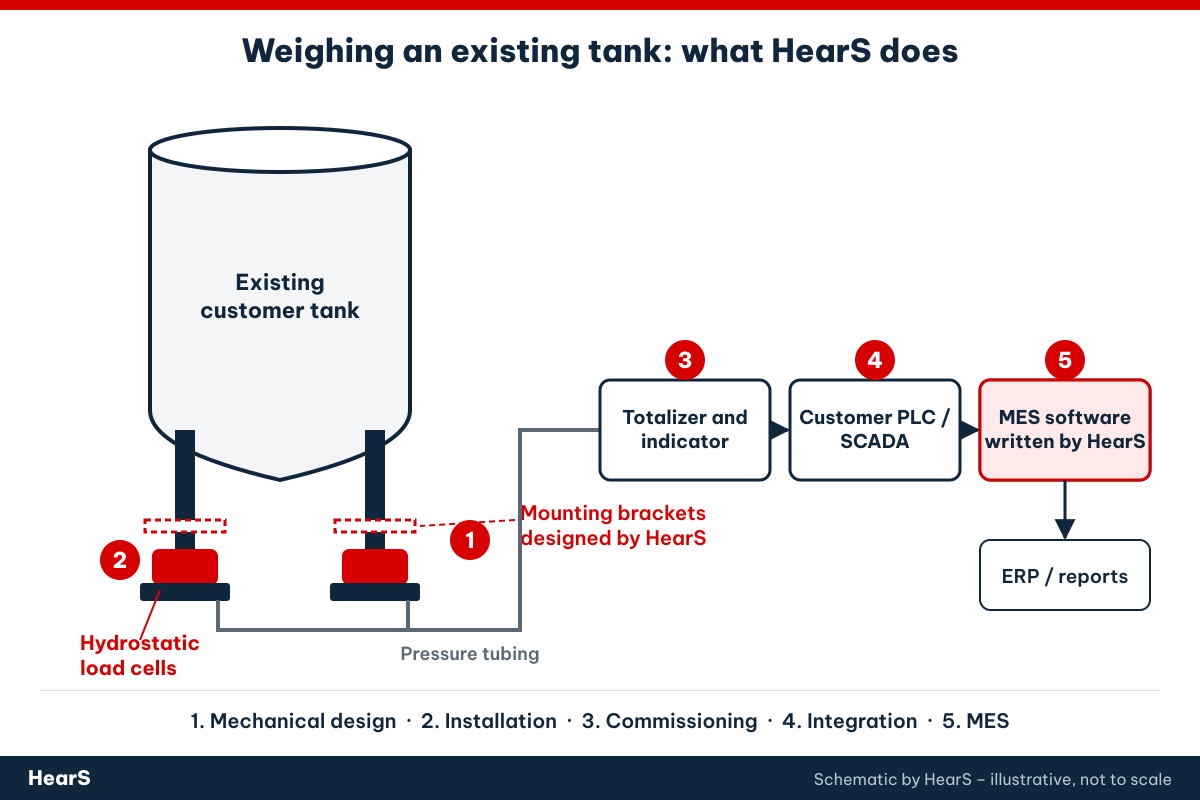
The MES software in this solution is E-Tools, by CCSS. HearS supplies the weighing equipment, designs the mechanics, installs and commissions the system, and integrates the weight data with your PLC, SCADA or ERP. The scope is agreed per project.
Have goods to weigh and track?
Tell us the goods, the site and the systems you use today. HearS will propose the design and scope.
Prefer to talk it through? Send us a photo of your current scale by email — and HearS will advise before any quotation.