
Technology
Hydrostatic weighing explained
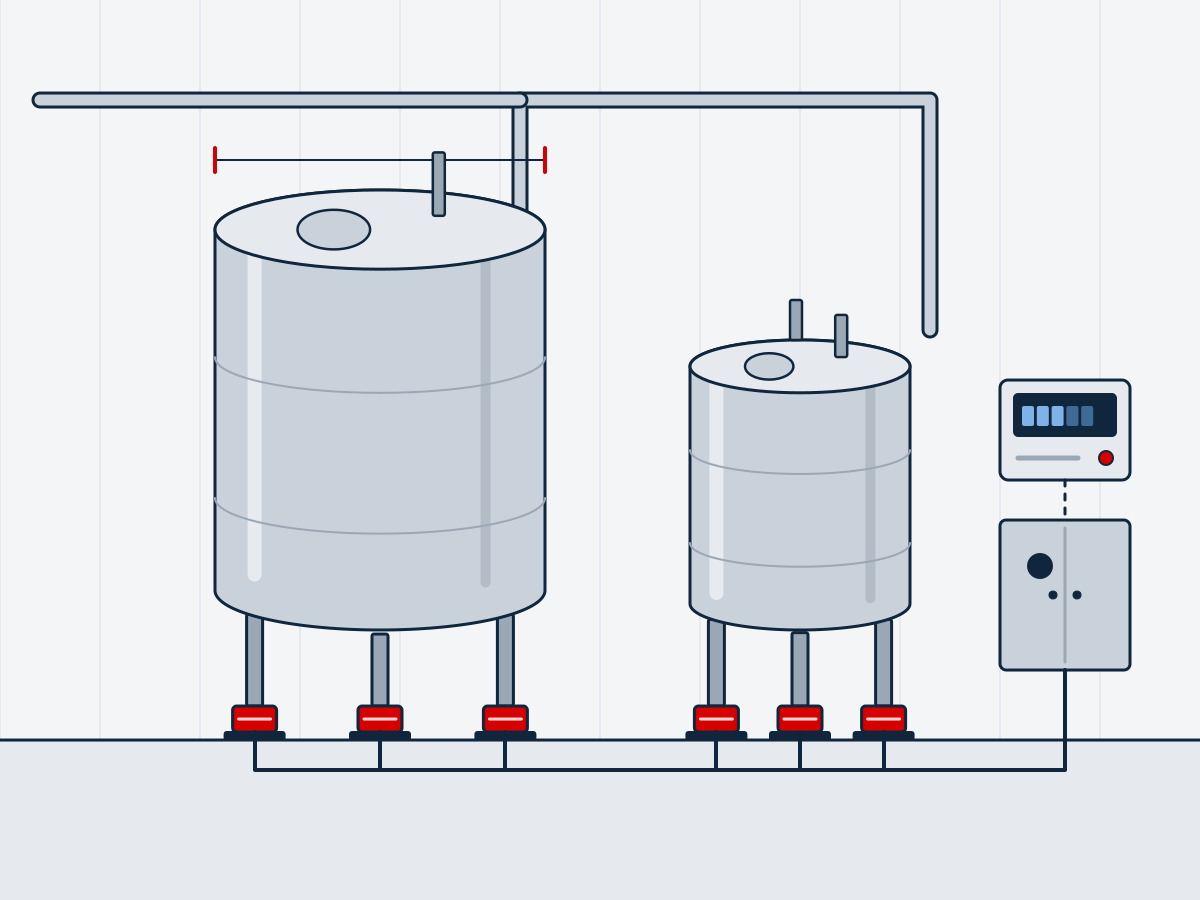
A vessel rests on fluid-filled load cells. The weight becomes fluid pressure, carried by tubing to a totalizer in a clean area. No electronics at the weighing site.
How it works
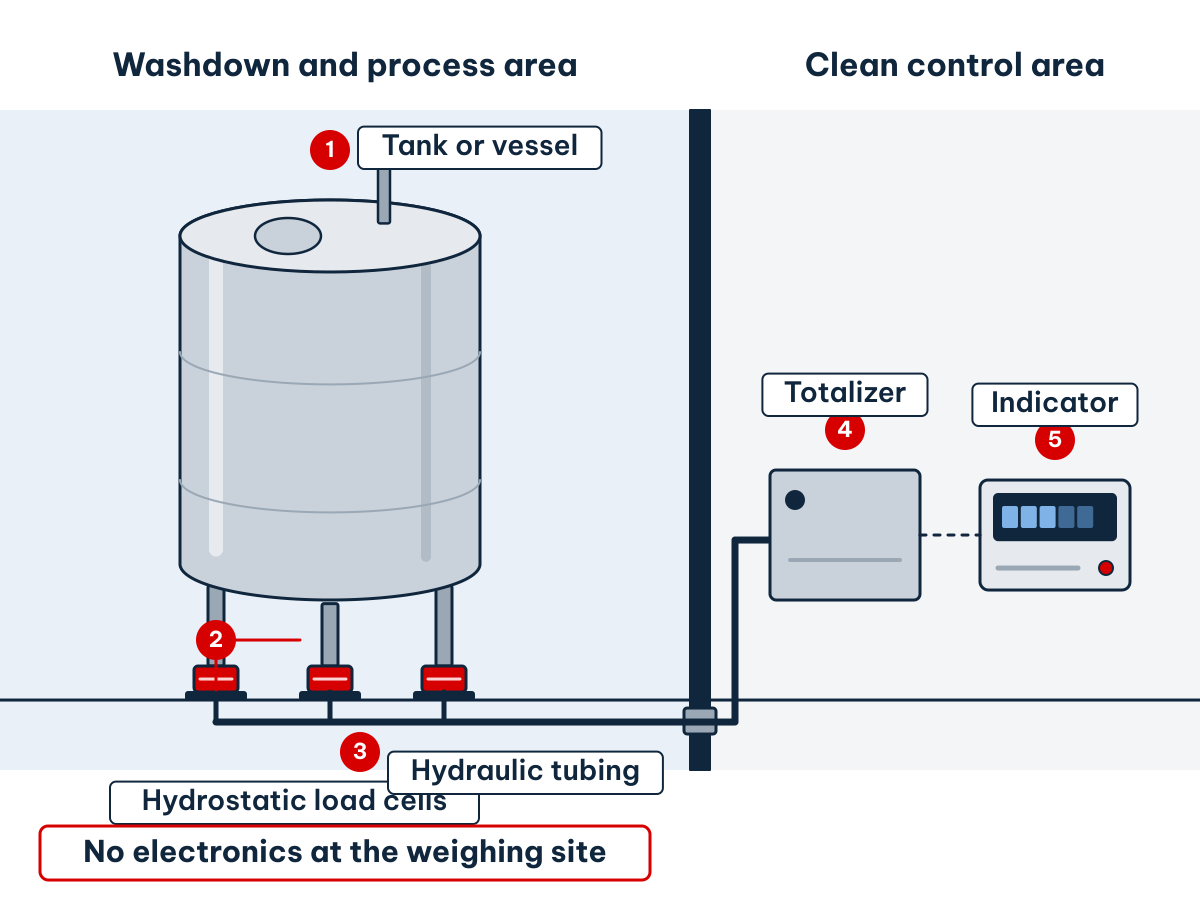
The only parts at the vessel are mechanical: the load cells and the tubing. The signal is created away from the washdown area.
From load to reading
Weight loads the cell
The vessel and its contents press on each load cell.
Pressure builds
The load changes the pressure of the fluid inside the cell.
Tubing carries it
Tubing carries the pressure to the totalizer in a clean area.
The indicator shows weight
The totalizer converts the pressure and the indicator shows the weight.
Why it suits wet and corrosive areas
Because the load cells and tubing are mechanical, there are no cables, junction boxes or electronics to protect at the vessel. That is why hydrostatic weighing is often considered for washdown, corrosive and hard-to-reach locations.
- No electronics at the weighing site
- The signal is created in a clean area
- Materials can be chosen for the cleaning regime

Hydrostatic and electronic load cells: a neutral comparison
| Topic | Hydrostatic | Electronic strain gauge |
|---|---|---|
| At the weighing point | Fluid-filled load cell and tubing | Load cell with cable, often a junction box |
| Where the electronics are | In the totalizer, in a clean area within the allowed tubing length | At the load cell and in the cabling |
| Typical concerns | Tubing routing and protection, temperature effects on the fluid | Water ingress, corrosion of cables and connectors, electrical noise |
| Often chosen when | Washdown, corrosive or hard-to-reach locations | Dry, clean or enclosed areas with a wide choice of indicators |
A general comparison. Always check the manufacturer's datasheet for the actual product.
Frequently asked questions
What is a hydrostatic load cell?
A load cell that holds fluid in a sealed chamber. Load on the cell changes the fluid pressure, which tubing carries to a totalizer.
Is electricity needed at the vessel?
No. The load cells and tubing work purely by mechanics and fluid pressure. The pressure only becomes an electrical signal in the totalizer.
How far can the totalizer be from the vessel?
Within the tubing length allowed by Emery Winslow Scale. We confirm the length for each system.
Is approval for trade use available?
Approvals depend on the product and the country. We confirm the approvals that apply in Vietnam before quoting a system for trade use.
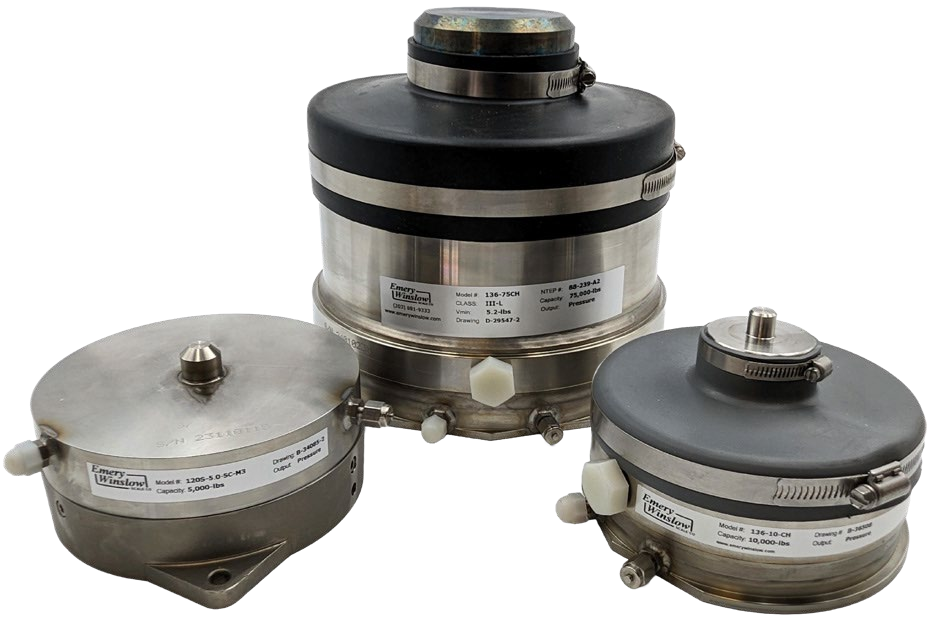
Emery Winslow Scale Hydrostatic™ Technology
HearS supplies Emery Winslow Scale hydrostatic weighing solutions. The manufacturer's technology page explains the load cell, the tubing and the Summing Totalizer in detail.
The other technology, in the same detail
Hydrostatic weighing is half of the weighing world. The other half — strain-gauge sensors, junction boxes and cabling — is explained on HearS’s electronic load cell systems page, and the two are compared side by side in Hydrostatic vs electronic load cells.
Discuss a hydrostatic system
Tell us about the vessel and the site.