
Heat shrink tubing
Choosing heat shrink tubing: ratio, wall and sizing
How to choose heat shrink tubing: read the sizes, work out the shrink ratio with an example, and pick the wall type and material.
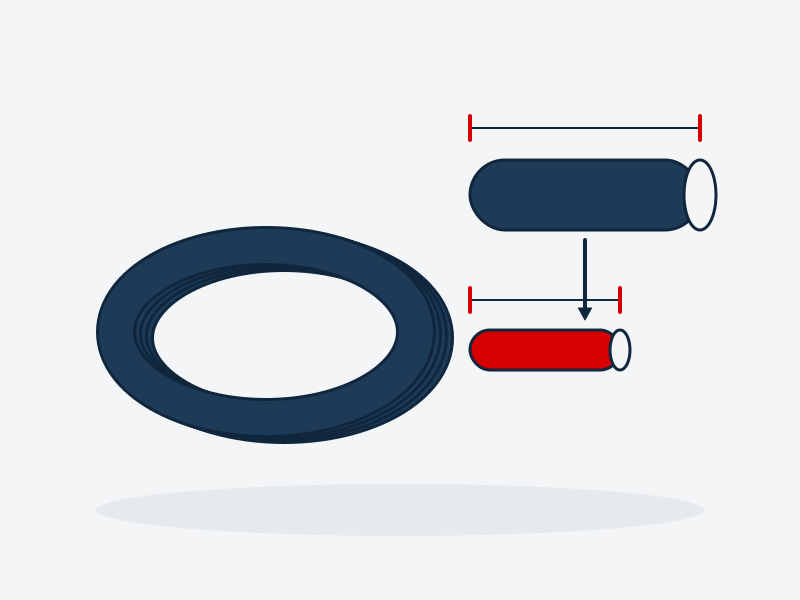
Heat shrink tubing is supplied larger than the part and shrinks to grip it when heated. Four choices decide whether it works.
Read the sizes
A tube is described by its supplied inside diameter, its recovered inside diameter and its shrink ratio. The supplied diameter must pass over the largest part. The recovered diameter must be smaller than the smallest part the tube has to grip.
A worked example
A lug 20 mm across sits on a 12 mm cable. The supplied inside diameter must be larger than 20 mm, for instance 24 mm. The recovered inside diameter must be smaller than 12 mm. A 3:1 tube of 24 mm recovers to 8 mm, so it fits both parts.
Choose the wall
Single-wall tubing gives general insulation. Adhesive-lined, or dual-wall, tubing adds a layer that melts and seals the joint against moisture.
Choose the material
Choose the material for the temperature, the chemicals and the flexibility the application needs. Check the continuous temperature rating on the manufacturer's datasheet.
Shrinking
Heat evenly, starting in the middle and working outward, so that air escapes. Stop when the tube has recovered fully and, for adhesive-lined tubing, a little adhesive shows at the ends. Overheating can damage the tube and the part.
Next step
Send the part sizes, the cable size, the temperature and the voltage, and HearS will reply with a quotation. See also heat shrink tubing.
Keep reading
Choosing electrical insulation tape
How to choose electrical insulation tape: the film, the adhesive, the temperature and the size, with practical wrapping tips.
Read the article: Choosing electrical insulation tapeHow to specify a tank weighing system
Six decisions that specify a tank or vessel weighing system: vessel, range, load cells, side loads, signal and installation.
Read the article: How to specify a tank weighing system
Need help with this?
Tell us about your application and we will reply by email.