
Electrical materials
Heat shrink tubing
Tubing that shrinks when heated to insulate, seal and protect joints, terminations and busbars.
What to know
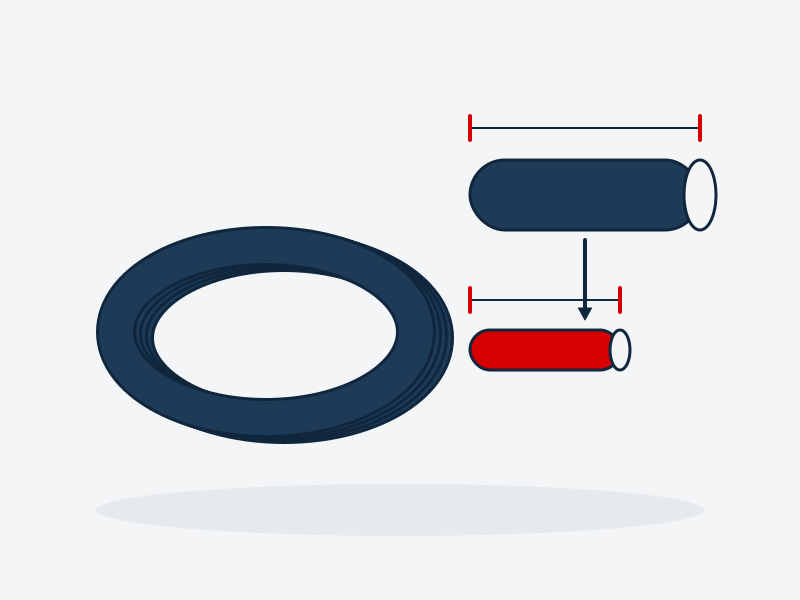
Heat shrink tubing is supplied larger than the part and shrinks to grip it when heated. Choosing it comes down to four things: the size before and after shrinking, the wall type, the material, and the temperature or voltage it must withstand. Ask us which tubing types and sizes we can supply for your application.
Typical uses
Joints and splices
Insulate and seal cable joints.
Terminations and lugs
Insulate and protect crimped terminations.
Busbars and cables
Add insulation and protection to bare conductors.
Sizing by example
A tube is described by its supplied inside diameter, its recovered inside diameter and its shrink ratio. Example: a lug 20 mm across on a 12 mm cable. The supplied inside diameter must be larger than 20 mm, for instance 24 mm, and the recovered inside diameter must be smaller than 12 mm. A 3:1 tube of 24 mm recovers to 8 mm, so it fits both.
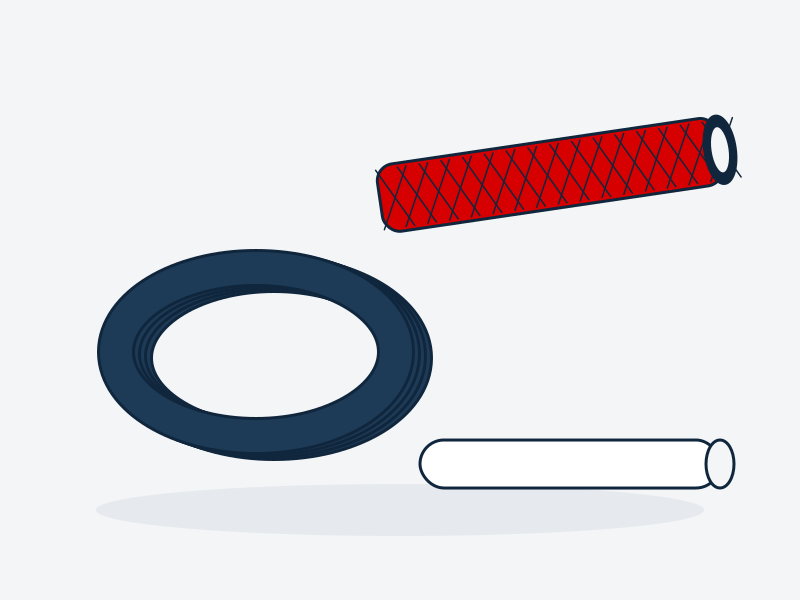
- Single-wall tubing for general insulation
- Adhesive-lined (dual-wall) tubing for sealing against moisture
- Material chosen for temperature, chemicals and flexibility
What to tell us when you request a quote
- Supplied inside diameter and recovered inside diameter
- Shrink ratio, for example 2:1 or 3:1
- Single wall or adhesive-lined
- Material and colour
- Operating temperature and voltage
- Length and quantity
Frequently asked questions
What shrink ratio do I need?
Choose the ratio from the largest part the tube must pass over and the smallest part it must grip. Higher ratios cover a wider range of sizes.
Do I need adhesive-lined tubing?
If the joint must be sealed against moisture, an adhesive-lined tube is usually chosen. For general insulation, single-wall tubing is often enough.
Related materials
Insulation sleeves
Fiberglass and braided sleeving for heat and abrasion.
Learn more: Insulation sleeves
Need this material?
Send the specification and we reply with a quotation.