
Weighing
How hydrostatic weighing works
Plain-language explanation of how a tank on hydrostatic load cells turns weight into pressure carried to a totalizer.
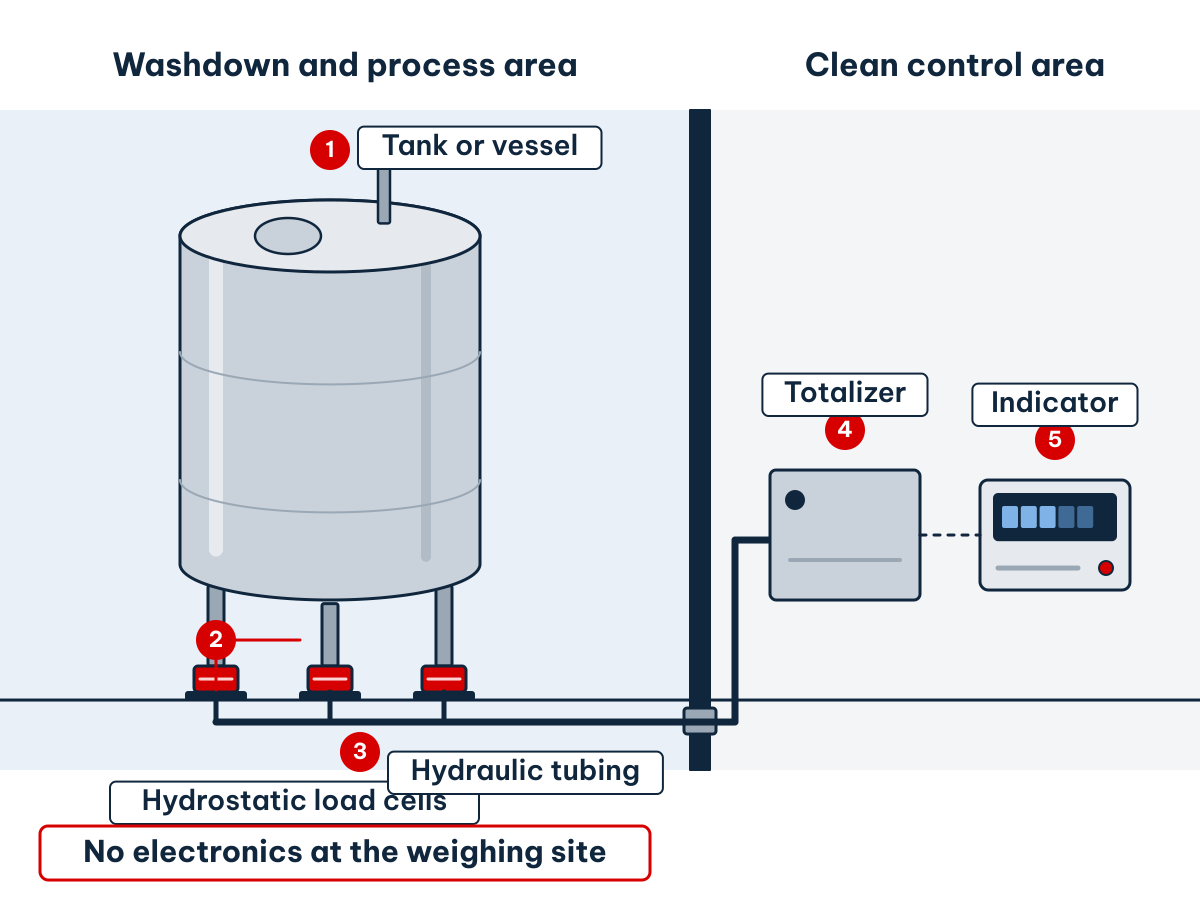
How hydrostatic weighing works
A vessel rests on three or four hydrostatic load cells. Each cell converts the downward force of the vessel and its contents into fluid pressure. Stainless steel tubing carries that pressure to a totalizer located in a clean, dry area. The totalizer sums the signals and sends a result to an indicator or control system.
This arrangement keeps electronics out of the weighing site. It is useful in wet, corrosive or washdown environments common in food and chemical plants.
Why the totalizer is remote
Moisture and cleaning agents can damage electronics. Placing only the mechanical sensor at the vessel and moving the totalizer reduces that exposure. The distance between the weighing site and the totalizer is limited by the tubing length specified for the system.
Neutral comparison
Electronic load cells place the strain-gauge element at the weighing point. Hydrostatic cells move the electronics away. The choice depends on the cleaning regime, corrosion risk and hazardous-area classification of the specific plant.
No electronics at the weighing site is the practical advantage for many washdown applications.
Next step
If you are specifying a tank or vessel weighing system, list the capacity, number of supports, cleaning method and any hazardous-area requirements. HearS can discuss the options.
Keep reading
Choosing electrical insulation tape
How to choose electrical insulation tape: the film, the adhesive, the temperature and the size, with practical wrapping tips.
Read the article: Choosing electrical insulation tapeChoosing heat shrink tubing: ratio, wall and sizing
How to choose heat shrink tubing: read the sizes, work out the shrink ratio with an example, and pick the wall type and material.
Read the article: Choosing heat shrink tubing: ratio, wall and sizing
Need help with this?
Tell us about your application and we will reply by email.